Showing posts with label casual games. Show all posts

Saturday, September 18, 2010

Facebook - The Future of Gaming?


Casual browser based gaming has become more widespread and normal thanks to Social networking sites such as Facebook. I recall when I was in college, playing browser based games seemed kinda "geeky" if you will; of course the Internet was fairly new around that point in time and not everyone at school had it, and if you did, you were often on a horrendous 56K dial up connection.

Now with the easy access to broadband Internet, more faster paced games could take place. Giving rise to Mega Multiplayer Online Role Playing Games or MMORPG's for short, and since these games required multiple players, social networking sites could be seen as a no-brainer move. I'd actually go out on a limb here and predict that as long as Facebook stays around, game developers will shift their resources into the online arena. Not only will there be more people playing their games, but the revenues will be higher and a more constant stream.

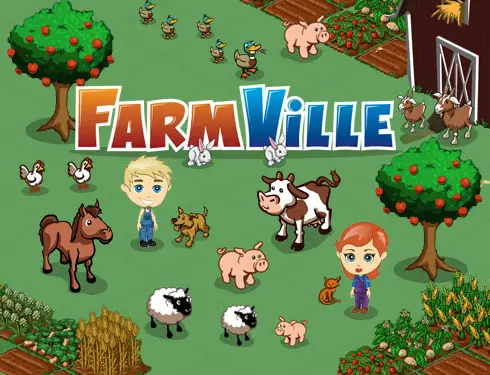
Think of it this way, say EA (a major game developer) puts out a game similar to Farmville (hypothetically speaking), the game will require time to develop for various platforms it is to be sold on (such as PS3, Xbox, Xbox 360, Wii, etc...), after that, it will require money to market the game, it will need to be distributed internationally via freight of some sort and if it's lucky, the game may have a [physical] shelf life of maybe a couple of years and then after that, it will cease to make money for EA. Compare this to actual Farmville, developed for one platform (Facebook, though it could be on other SNS that I'm unaware of), marketing is done pretty much through word of mouth via Facebook, distribution is via Internet and doesn't take space on a shelf, so it will be around indefinitely (or as long as Facebook retains its user base), continuous updates can be made to the game to take advantage of real world changes, promotions and the like. Therefore, the game can continue to bring in money for the developer more long term.

In fact, according to Gamepro, many big names in the console/PC gaming industry such as Sid Meier are expressing interest in exploiting this potential lucrative market. Just as Napstar, Kazaa, p2p file sharing & Apple iPods & iTunes have changed and shifted the music industry complicating the financial survival of physical stores such as Real Groovy, the same could happen to game developers such as Take Two Interactive, EA Games & Activision thanks to Facebook.

Wednesday, July 28, 2010

Casual Games: Investment, Time and Effort

It appears to be a trend that those who were not bought up in an environment where gaming was popular, if they later approach games, tend to favour so-called 'casual games'. Many, however, shun games entirely, seeing them as nothing more than a waste of time. More interesting is the group who claim they don't have time 'to waste' on 'serious' games, but nonetheless play casual games.

Bejeweled
Figure 1. Bejeweled
Source: Wikipedia


Casual games, such as Bejeweled (fig. 1), may be characterised by the following traits:

  • They do not require specialist hardware, such as a console.

  • They do not require installing specialist software, frequently making use of Web-based platforms such as Flash.

  • Many are available free of charge on websites, often as an adjunct to the website's main function (for example Social Networking).

  • The learning curves of casual games are both shorter and less steep than those of 'non-casual' games. This means that the skill differential, as well as time-to-mastery of a casual game is significantly lower.

  • Casual games usually have a high ease and imperative of replayability - forming a tight feedback loop - and commonly (although not universally) also a high replay value.

The penultimate point has the implication that within a short period of time and with minimal effort spent playing a casual game, one can easily become 'good at' the game. This is perhaps the most significant factor contributing to the ascribed 'casual' nature of these games. The final point above, however, contends this nature.

Casual games expect, or perhaps even demand, of the player a significant investment of time during each session of gameplay, to the degree that they have been considered some of the most addictive games (K. Veale, personal communication, February 3, 2010). While the instance of gameplay (from start to 'game over' / replay point) of a casual game may be quite short, an entire session of gameplay frequently comprises many such instances. How many of you have simply put a casual game down after the first go, especially after doing badly?

Many 'non-gamers', including those who play casual games but nonetheless do not self-identify as Gamers, are those who claim (or perhaps once claimed) to not have the time to waste on games. Is it the case that these people feel games are only a 'waste of time' when they require an investment of effort1 (effort being seen as a subversion of play), or that they simply try out casual games in what spare time they do have and become addicted? If the former is true, does it mean that we are becoming too lazy even for play, and if the latter is true, does it mean that non-gamers are more prone to gaming addictions?

1. In the sense of exertion, rather than ergodicity.