Saturday, September 11, 2010

Older Generation + Internet = Romance

In recent years, the Internet has reached an all time high in popularity. You could strongly argue that it has become an essential part of our lives. The majority of our youth today has becoming fully invested in the Internet, allowing us access to it’s wide range of services. The Internet has not only become popular within our younger generation, but it has also started to creep its way into the daily lives of our much older generation (Grandparents, Senior Citizens).


Nowadays, the Internet offers many different services to our older generation. Dating sites, chatrooms, forums, and discussion boards have been set up all over the Internet with the sole purpose of attracting senior citizens. Popular websites such as overfifties.com, and seniormatch.com offer a wide range of services that are specifically targeted towards the older generation. These sites provide our seniors with a new lease on life, allowing them to make new friends, create new relationships, and possibly find love. With recent changes in attitudes, senior online dating has become increasingly common. Seniormatch.com is the “best dating service for senior singles, senior widows, senior widowers, senior admirers and senior friends to share golden times.”


Online romance has become extremely popular throughout the older generation. The Internet has allowed its users instant access to a whole new world. This world is full of alot of lonely older people who are looking for something to fill their days. This new medium is providing them with something to look forward to, allowing them to brighten up their days. A 62 year old woman named Marilyn Rogers, describes herself online as a “1950s model that has a few dents and dings”. Some days Marilyn receives up to 200 messages; it is these messages that have given Marilyn her new found confidence.


The Internet has provided our older generation with a new way of finding love, one that allows immediate communication from the comfort of the user’s living room. The Internet is not only affecting our lives, it is creeping its way into the lives of all ages. The Internet has reached the lives of a generation, that isn’t always so accessible. It has provided them with the ability to communicate with their peers, bringing them certain joys that previously weren’t as accessible. Romance is just one of the many services that the Internet has provided our older generation with.

Thursday, September 9, 2010

Stephen Hawking 2.0

I'm not a fan of films where aliens or robots attempt to exterminate the human race. Too predictable. $200 million and 2 1/2 hours later, we've won through a series of improbable events. Like Independence Day, when Jeff Goldblum takes out the entire fleet with a computer virus. This only works because the ships are running on Windows. Blue Screen of Death.

Personally I'm all for space travel. Not enough room on this rock. But the idea of artificial intelligence is... a little worrying. Though the "in" term now is Artilect. By the end of the century is it predicted we will be able to construct artificial intelligences millions, if not billions of times more intelligent than humans. The stuff these intellects could do is literally inconceivable. And therein lies the problem: if we make machines more intelligent than us, machines capable of churning through millenia of human thought in seconds (if that), what happens to us?

Computers now are basically number crunchers: we put in the algorithms and out comes the physics. Or it plays ping pong. Mmm, progress! My laptop is excellent at maths but its not intelligent. It doesn't think. Human endeavour still matters because we're still the ones punching in the numbers. But what would be the point of anything if we had a machine that could run literally trillions of scenarios and give us all the answers to every question put to it?
For example, there are 88 notes on a piano and for arguments sake, most music works within this parameter. There are only a certain number of notes. And if you add words, of which there is also only a finite number, there is still only a certain number of songs possible. An artificial intelligence could write every single possible piece of music, without the personal and artistic processes. Such a machine would be beyond humanity in any conceivable form.

So far I'm still working within mathematical sequences. Personally I think it is important that we create artificial intelligence, but even more important that we don't bite off more than we can chew. The first digital person would be a landmark achievement in human history. It would help us understand ourselves. I cite "Bicentennial Man" as an attempt to grasp this idea, at least in popular culture. Andrew Kennedy in his book "Who is human anyway?" presents the idea that artificial intelligences will have severe personality disorders and will fall into four groups: the autistic, the collector, the ecstatic, and the victim. This makes sense. Just because a machine would be extremely intelligent, it would exist within an artificial environment and wouldn't be immersed in a social context like humans.

Just so you know, I'm confused by all of this and I'm trying to work out something. The difference between my laptop and an AI is that the former comes preprogrammed but the latter... doesn't. We shouldn't anticipate SkyNet coming to destroy us all. If you think about it, that entire franchise could have been avoided if they didn't give SkyNet access to the internet. Or set up an 'Off' button. A computer without internet is effectively useless.

I think what people are scared of is the complete redundancy of the human race. Hell I know I am. A future of indolent humans lying around while our robots do all the work? I think not. AI will be most useful in science I think. Leave the Arts to the meat bags. And don't forget the 'Off' button.

Just so you know I'm aware this isn't the most elegant grasp of the AI debate.

The iPodfather

Who is Steve Jobs? Only the CEO of Apple, the leading consumer technology company in the world. No biggie.He's not an actor, musician, model or anything important like that, so why dedicate a blog to him?


I've previously not even given this guy a second thought. But Steve Jobs matters more than any celebrity, not merely for the fact that he helped to engineer the pretty MacBook that I'm typing this on.


A quick bio reads like this:

  • Jobs founded Apple, out of his basement, and basically revolutionised personal computing.
  • He was fired from Apple, the business that he helped create, in 1985.
  • He went on to found NeXT (a computer company) and Pixar.
  • Apple purchased NeXT and in 1998, Jobs was back at as CEO of Apple.
  • From there till now, Apple has given the world the iPod, iPhone and iPad alongside several personal computers

Steve Jobs basically then, can be credited with the content that we study in this paper. For instance, the iPod introduced us to the first ultra-portable music player, which meant that you could carry your entire music library with you, with a ten hour battery life. Unheard of. On top of that, without Steve Jobs we wouldn't have had Toy Story or Finding Nemo. Eek.


Without these technologies, some of the current issues and debates would possibly not be circulating, such as Mark Bauerlein's concern's of "The Dumbest Generation", or more recently, the health risks such as hearing loss and pedestrian deaths associated with these technologies. Not to mention the issues of advertising, gender and many of the other topics discussed in this course.


Without Steve Jobs at the helm of Apple, would the phenomena of the personal computer of the ultra-portable mP3 player have occurred? Did Jobs merely accelerate the inventions? Or is he simply a face behind a collaborative effort?


In light of what I have discovered about Jobs, I would like to suggest that he has not singlehandedly, but in large part, transformed and moulded the present technoculture. He is The iPodfather.


Wednesday, September 8, 2010

3Gs : Girls, Gender and Game


I called it the 3Gs. Not because it is short, but it is also the most interesting discourses that emerged within new media platforms. Gender is a relatively new notion that arise within the discourse of gaming culture and it is interesting for us to see how the discourse of gender is interacting with the gaming culture as a whole.

I see gender in gaming culture in two distinctive ways : Either as a role model for the female or an eye candy for the male. The famous game 'Lara Croft' has stirred up furious debates within the scholars, whether the fictional character of Lara Croft can be seen as a feminist icon or merely an eye candy. The point being made here is that, when the discourse of gender intertwined with the gaming culture, contestation over whether gender has become a commodity to sell to the masses comes into the spot light.


In many games, the female characters are highly sexualized, and their body features become one of the selling point of the game. For instance, Lara Croft's body become such a hot topic that every guys on the street will talk about when the game first came out. Croft's body represent the perfect body that a female can have, and she is smart, tough and can be as strong as a man whenever she wants or have to. She is the role model to the female gamers; but on the flip side, she can also be the eye candy for the male gamers, where her highly sexualized body are perpetuating the sexist stereotype of female.

In gaming culture, the female characters are being stereotype and portrayed as a hyper-sexualized object of desire ,and they often appears to be a supportive characters or a member in the group to provide 'motherly' touch to the members in the game, such as having 'healing ability that takes away our pain', or 'power of love to overcome obstacles'. But Lara Croft is different. She is crossing the traditional boundary of gender. She is seen as a threat to the masculine system due to her Fatal Femme quality. According to Helen Kennedy (2002), she referred Lara Croft as both the hero (active) and the heroine (to be look at). Lara Croft can be tough as a man, but her body is still subjected to the male gaze.

Lara Croft is one of the iconic female gaming figure that influence the gaming culture. Before that, there are no female gaming icons that are as versatile as Croft is. She blurred the distinction of being a man or a woman, or she can perform both at the same time. But, on the other hand, Lara Croft as an iconic figure are still subjected to the male gaze and perpetuating the female sexist stereotype.


Zapping the Masses


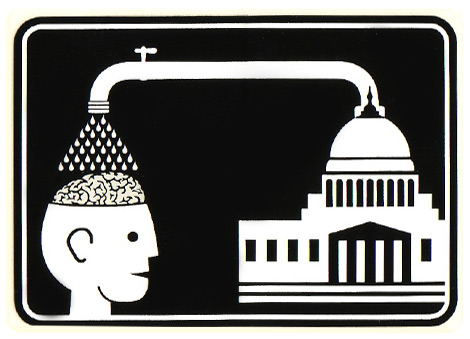
The idea of being able to send out electrical frequencies and ‘zap’ peoples minds in order to then download certain behaviors, actions or ideologies sounds like an average day on set of a psi-fi series.

The shocking thing is that its not fiction, nor does it appear to be a thing of the distant future, but it is a reality of today.

While we may not quite be to the point of zapping peoples brains, technology has been developed that allows the interpretations of human conscious and unconscious thoughts and emotions. Along with this the technology for sending out signals which can alter or affect the human brain in particular ways has also been on the rise sense the first known experiments in the cold war.

Imagine what this could mean. People who have lost the use of their limbs could, through the power of their own mind and technology, move once again, could speak, could become artist or virtually anything they desired to become. So long as the brain was working, anything can potentially come into existence.

The possibilities for the mind itself may also be transformative. Signals could enter the brain to reduce anxiety, create regular sleep, or keep the mind positive.

Of course, as the saying goes, with great power comes great responsibility.

And who should be able to control this power? Would it be any safer in the hands of the people as it would be in the hands of the government? Power corrupts, of that there is unyielding proof. The selfish streak in humanity runs deep, and any kind of ‘electronic telepathy’ or signalaing that can be used to bennifit an individual, a group, a nation, will undoubtably be used to benefit one to the detriment of others.

But should such fears of control and manipulation really stop such exciting ventures into unkown possibilities? People always have and always will find ways to manipulate others, be it with words or actions. While the consequences could be on a more dramatic scale with such technology as this, the doors it could open and the benefit it could create would be ten fold as well.

I guess what it really depends on is peoples faith in ourselves and the world in which we live.


Pornography : Prosumer in our era


Well, who hasn't visited a pornographic websites before?

Recently, there's bunch of news about hollywood celebrities' home-made porno is leaking outwards onto the internet. This is nothing new for us. It seems that internet become the biggest 'exporter' for pornographic materials. Through new media platforms such as the Internet, we get exposed to millions of sexual materials that challenge our sense of morality and the discourse of identity.

As mentioned in class before, pornography is the leading economic driver for internet growth. I am arguing here that how pornographic changes our identity, perspectives and our society today. Sex has always seen as a taboo, and pornography has always been identify as a taboo because it is sex that is divorced from its original emotions, which is 'love' (Geoffrey Gorer). The society before our era treated pornography as something that is shameful, guilty and filthy. But with the invention of internet and its ability to reach billion of people, the discourse of pornography seems to be going through a drastic change. Our world is bombarded with informations, images, topics and conversations about sex. This is due to the change of media platform through out the years; pornography were originally circulated within the public through traditional printing medias, such as books, papers and et cetera. But when it switch to operates on internet, it floods the world and reach out more widely than it was on printed medium.

This widespread effect has an impact on us in a macro and a micro ways: such as our society on a macro level; as well as our identity on a micro level. Pornography are no longer exclusive to be produce only by big film companies, but at this stage, the notion of 'prosumer' emerged and more and more normal, ordinary people in the society started to produce their own pornography materials, and they actually become products that other people can buy online. That links to my second point, where our identity and relationship with online pornography has been re-constructed. The traditional notion of intimacy no longer have the same meaning, as more and more individuals started to share their intimacy relationship online with billions of other people; and individuals in the society are most likely to get their sexual impressions, educations and stereotypes from online pornographies. Thus, online pornography structured our relationship as well as our attitude with and towards sex.

What really struck me was the increasing amount of homemade pornography materials nowadays. Internet can easily circulate products, informations and so on easily. Therefore, individuals in the society get exposed to different materials that they have never encounter before. Internet re-shape our sense of intimacy, and construct sex as something that does not comes with any consequences, and it can be derived from emotions. In the end, sex becomes a product on the internet, and everyone can just buy it without much thinking. The frightening side of this is that, sex no longer seen as something that is just between two person or a private matter; new media platform offered us a way to commodify even our sexual intimacy.

Online pornography have shifted our perspectives and identity in a subtle but drastic way. We no longer view sex as a taboo, and sex can become a commodity to be buy and sell. The anonymity features of internet also contribute to the fact that anyone can buy or sell anything obscene without worrying one's identity getting exposed.

An advise for people that decided or going to publish your intimate moment of you and your partner : once your material get online, it will never go offline...FOR LIFE.


Tuesday, September 7, 2010

With my weak ties, I find no tie...


If not for Donath's reading and Week 6's lecture, I wouldn't have noticed how much I actually don't pay attention to friends on my facebook list that are not affiliated with any other friends or interests of mine. I went through my friends list and I must admit, 1 quarter of the list (of approximately 600 people) are people who I either went to secondary school with back in the days but was really never friends with them, or people on the other side of the world I've never met or have any reason to meet in the future. With the former, you'd think I'd have at least something else apart going to the same school in common, but really I don't, so they qualify as weak ties. With the latter, these set of people might have at least 5 friends in common with me (the only reason I accept their request), but these 5 (or more) friends in common are most likely those I'd met online and got to develop a degree of friendship with over time - virtually and offline (thanks to Skype, Instant Messaging, E-mail and phones).

To reiterate the term 'weak ties' for the lost one, weak ties are people on our friends list on social networking sites who we may never be close to, but through them, we can gain new insights and ideas, learn things and be in-the-know. This (apparently) gives us new forms of opportunities when we connect with these wider diversity of people. Personally, this doesn't apply to me, and I know a lot of people it doesn't apply to either. Not all weak ties are constantly engaged in the act of 'fashioning' - that is, not all of them are consistent and up-to-date with facebook and its features. In fact, I don't have much weak ties that frequently update their pages or engage in multiple social interactions, I find this odd because you'd expect the opposite, as in, the outgoing stranger who add you is most likely looking for new friends to include in his/her social grooming habit. This being the opposite in my case, this is why I rarely notice people I have nothing in common with, but are on my pals list.

So if I don't notice them, how exactly does this idea of weak ties as a way of gaining insights apply to me? 'Me' here represents an imagined group of people whose weak ties are also almost obscure. I must however acknowledge the very small group of weak ties that are only an exception in this argument because they have something to offer. That is, the aspiring musicians, writers, fan groups, activists, and so on. I find what they all have to post or say interesting, but that's only just a small number. What about the 1/4 people silently sitting in my list? Surely I cannot delete them, surely they probably don't know I exist, I'm actually curious to start getting to know them, but for now, there's no advantage, no signals, no grooming, nothing that connects us together in any verbal or textual way. Do I have the time? Of course, that's the beauty of SNS addiction... a semi-addict like me can always make time for facebook and social grooming. Do I have the resources? Yes, thanks to facebook's constant useful new features, for instance, the side box that instructs you to "Say Hello to *insert the name of someone passive on your friends list* ". And the 'Chat' (which I never use though).

Long ranting short, how influential are my weak ties on my experience online daily? On a scale of 0 to 10, I'd say a 1 (and a half).